
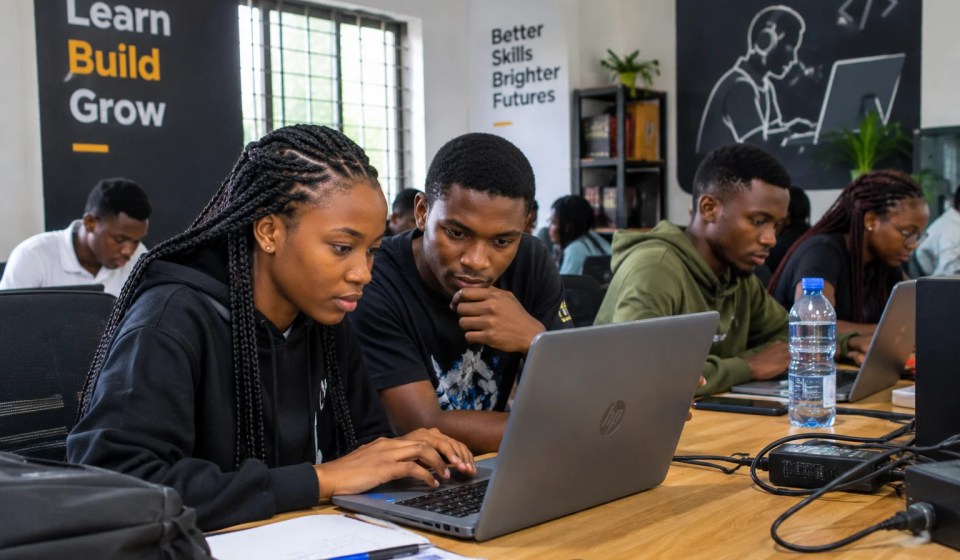

A young person in Abia may be ready to learn Python, a student in Enugu may want to practise web development, and an aspiring cybersecurity analyst in Anambra may be eager to build practical skills. Yet each could face the same obstacle before writing a first line of code: getting access to a computer they can use consistently.
Nigeria’s South-East tech ecosystem should challenge the idea that starting a tech career requires owning an expensive laptop. A suitable computer is important for many technical roles, but personal ownership should not become a test of who deserves to learn. When talent is filtered by purchasing power before it can be demonstrated, the industry risks shutting out people who could contribute meaningfully.
The issue is bigger than the price of a device. Learning technology also requires electricity, internet access, time to practice and opportunities to apply new skills. Treating these as personal problems leaves beginners to overcome barriers that training providers, employers and the wider tech ecosystem can help reduce.
The Cost of Entry Can Become a Barrier to Talent
Nigeria’s digital economy depends on people who can develop software, analyze data, secure systems and solve business problems with technology. Yet the route into these careers is not equally accessible to everyone.
The Garage’s State of Student Work report, based on a survey of more than 4,000 students across 55 tertiary institutions in 29 states, provides a useful picture of the challenges facing young digital workers. It identifies poor internet connection, unreliable electricity and uncomfortable workspaces among the obstacles students face while learning digital skills. The report also finds that more than 60 per cent of student workers earn below ₦100,000 monthly, illustrating the limited income many are working with.
The report does not establish how many Nigerian students lack laptops or cannot afford them. It does, however, document the financial and infrastructure pressures surrounding young people trying to learn and earn through digital work.
For a beginner funding school, transport, food and data from a limited income, buying a capable laptop may compete with other essential expenses. Even someone who manages to buy one still needs a reliable way to charge it and connect to the internet.
This is why access should be considered alongside training. Teaching someone a skill without providing a realistic way to practice it can leave that person with knowledge they struggle to turn into competence.
A Smartphone Can Help You Start, but It Cannot Do Everything
There is a practical argument for beginning with what is available. Smartphones can support introductory lessons, technical reading, online communities, note-taking and some coding exercises. A beginner can learn programming concepts, study networking fundamentals or explore cybersecurity theory before purchasing a computer.
However, it would be misleading to suggest that a phone can replace a laptop throughout a technical learning journey.
Building and testing full-stack applications, managing development environments, using many cybersecurity tools, working with virtual machines and completing certain professional tasks are considerably easier on a computer. Some activities require desktop operating systems, more memory or software that cannot run properly on a phone.
Beginners should therefore use smartphones as an entry point where appropriate, not accept them as a permanent substitute for the equipment their chosen career requires.
The more useful question is how to help learners move from limited access to regular, practical computer use without making an expensive purchase the first condition for participation.
Access to Practice Matters More Than Ownership Alone
A laptop is a tool, not proof of skill. Owning one does not automatically make someone a developer, designer or cybersecurity professional. Equally, someone who does not own one should not be presumed incapable of becoming any of these.
Training centres, universities, tech hubs and community organizations across Abia, Anambra, Ebonyi, Enugu and Imo can help close this gap by providing scheduled access to functional computers. Shared computer laboratories, supervised practice sessions and device-lending schemes could give learners time to work on projects even when they cannot afford personal equipment.
Such initiatives need more than donated devices. Computers must be functional, maintained, available when learners need them and supported by reliable power and internet access. A laboratory that is frequently closed or has unusable equipment offers little practical value.
Training providers can also design courses around the resources students actually have. Introductory lessons can teach core concepts using lightweight tools where possible, while programmes should clearly explain when a laptop becomes necessary and what minimum specifications are suitable for the learner’s intended path. This helps beginners avoid spending money on either an unsuitable device or a more expensive one than they need.
Employers have a role too. Where a job requires a computer, companies should consider whether they can provide equipment for interns, apprentices and junior staff rather than automatically expecting every applicant to arrive with all the tools of the trade. Remote work arrangements should also be transparent about equipment, power and connectivity requirements.
Does Every Beginner Need a Laptop Provided?
Not every learner needs a free laptop, and device ownership is not the only challenge affecting entry into tech. Some people can access shared computers, while others may prefer to purchase their own equipment as their needs grow. Training providers also face real costs in buying, securing and maintaining devices.
Furthermore, some technical work demands equipment that shared facilities cannot always provide on demand. Learners eventually need enough independent practice to complete projects, troubleshoot problems and work without constant supervision.
These are valid considerations, but they support a more practical approach to access rather than leaving the barrier unaddressed. Shared facilities, affordable refurbished computers from reputable sellers, transparent device specifications and structured access programmes can offer different routes depending on a learner’s circumstances.
The objective is not to remove personal responsibility or promise that a tech career can be built without equipment. It is to ensure that beginners have a reasonable opportunity to acquire the tools and experience needed to demonstrate their abilities.
Make Talent the Starting Point, Not Purchasing Power
South-East Nigeria has young people interested in software development, data analytics, cybersecurity, product design and other digital careers. Their potential should be assessed through their curiosity, consistency, problem-solving and work, not simply by whether they can afford a high-specification laptop before they begin.
Students should make strategic use of available resources, choose equipment according to their career path and build practical projects as their access improves. Training providers and tech hubs should expand opportunities for hands-on practice. Employers should examine whether their entry requirements screen out capable beginners for reasons unrelated to the work itself.
A laptop will remain an important investment for many technology careers. The problem is making expensive personal ownership the price of admission before a beginner has had a fair chance to learn.
Nigeria’s South-East tech ecosystem should make it easier for capable beginners to access the tools they need. Talent cannot grow through tutorials alone; it needs opportunities to practice.
Discover more from Scalepoint Africa
Subscribe to get the latest posts sent to your email.


Hmmm, Very insightful!